




Spark plugs are easy to overlook—until your vehicle starts running rough. Many drivers have the same questions: how long do spark plugs last, how often should you change your spark plugs, and how often do spark plugs need to be replaced? The answer to how long do spark plugs last depends on the type of spark plug, your driving habits, and the vehicle you drive.
At Camden Chevrolet in Camden, Tennessee, we see every day how regular spark plug maintenance keeps vehicles—from daily-driven Chevy Impala to family SUVs like a used Chevy Tahoe—running smoothly and reliably.
What a Spark Plug Actually Does (And Why It Matters)
Every gasoline engine uses spark plugs to ignite the fuel-and-air mixture in each cylinder. This small, controlled spark triggers thousands of tiny explosions every minute, generating the power that drives your vehicle.
As spark plugs wear, combustion becomes less consistent. This can cause engines to lose efficiency, reduce power, and lower fuel economy. Ignoring worn spark plugs for too long may even lead to more expensive repairs down the road.
How Long Do Spark Plugs Last on Average?
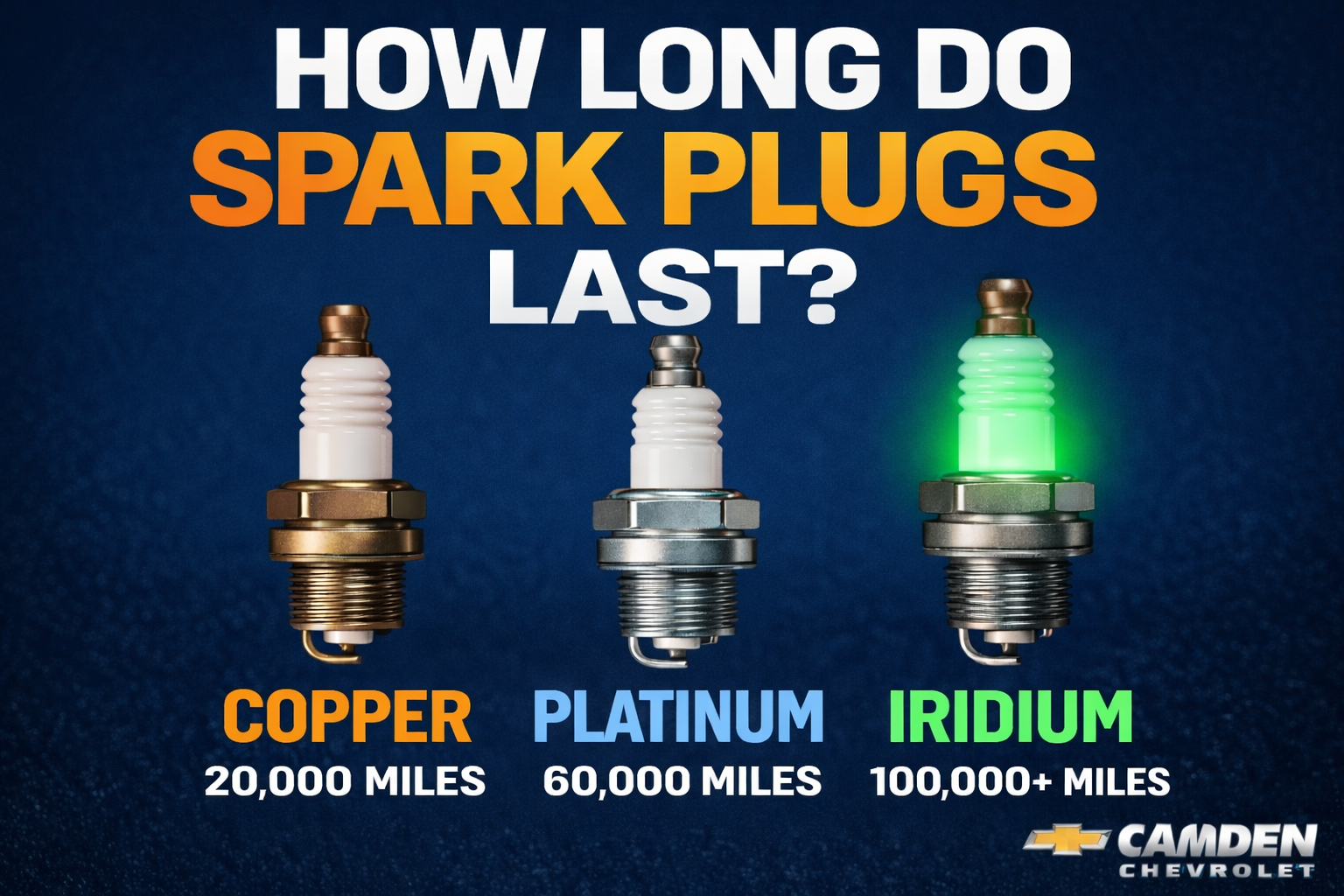
So, how long do spark plugs last in everyday driving? It mostly depends on the material of the spark plug.
- Copper or nickel spark plugs: usually last about 20,000–30,000 miles
- Platinum spark plugs: typically last 50,000–100,000 miles
- Iridium spark plugs: often last 75,000–100,000+ miles
That’s why newer vehicles and late-model Chevrolets generally use longer-lasting spark plugs, while some older models—including certain 2021 Chevy vehicles—may still require more frequent replacements.
How Often Should You Replace Spark Plugs?
Drivers often wonder, how often should you replace your spark plugs or how often should you change your spark plugs? The best guideline is mileage, rather than age.
As a general rule:
- Replace copper plugs every 25,000–30,000 miles
- Replace platinum spark plugs around 60,000–100,000 miles
- Always check your owner’s manual for specific intervals
Your driving habits also play a role. Frequent short trips, stop-and-go traffic, towing, and using lower-quality fuel can all shorten spark plug life.
Signs Your Spark Plugs Are Wearing Out
Spark plug problems can be subtle, but a few common warning signs often appear:
- Rough idling or noticeable engine vibrations
- Sluggish acceleration or less engine power
- Engine misfires or hesitation
- Decreased fuel efficiency
- Difficulty starting your vehicle
If your vehicle feels less responsive or you notice a drop in gas mileage, inspecting the spark plugs is a good place to start.
What Causes Spark Plugs to Fail Early?
Several issues can lead to premature spark plug wear:
- Carbon buildup from low-quality fuel
- Oil leaks that dirty the plug tip
- Overheating from cooling system problems
- Using the wrong plug type or incorrect installation
Choosing the incorrect spark plug—even a less expensive alternative—can impact your engine’s performance and lifespan. That’s why manufacturers specify the right plug for each engine.
Understanding Spark Plug Types
Copper Spark Plugs
Copper plugs are affordable and dependable, but don’t last as long. They’re best for older engines built to use them.
Platinum Spark Plugs
Platinum spark plugs offer longer life and resist carbon deposits. Many newer vehicles use them to reduce maintenance needs.
Double Platinum Spark Plugs
Ideal for wasted-spark ignition systems, these plugs wear evenly and outlast standard platinum plugs in those engines.
Iridium Spark Plugs
Iridium plugs last the longest. While they cost more upfront, they need to be replaced far less often.
Why Timely Replacement Saves You Money
Neglecting spark plug maintenance can do more than reduce performance—it may also lead to expensive damage to your ignition coils and catalytic converters. These repairs cost much more than simply replacing spark plugs on schedule.
Regular spark plug replacement helps to:
- Keep your engine running smoothly
- Boost fuel efficiency
- Lower emissions
- Avoid costly repairs down the road
Real-World Spark Plug Maintenance: Pro Tips from Camden Chevrolet
Let’s be honest—spark plugs aren’t exactly the most glamorous part of your car. But if you want your Chevy to keep running like a champ, a little extra attention goes a long way. Here are some hard-earned tips straight from our service bays to your driveway:
1. Take a Look, Even When Things Seem Fine
Don’t wait for a dashboard warning or a hiccup at the stoplight. Pop the hood every so often—say, with every oil change—and give those spark plugs a quick check. If you see heavy carbon buildup, oil, or corrosion, it’s time for a closer look (and maybe a replacement).
2. Don’t Skip the Gap
Even if your spark plugs are “pre-gapped,” a lot can happen between the factory and your garage. A simple gap tool costs a few bucks and can save you from frustrating misfires or rough starts. Set the gap to your Chevy’s specs—consistency is key for smooth performance.
3. Invest in Quality, Not Just Price
It’s tempting to grab the cheapest plugs on the shelf, but your engine will thank you for choosing OEM or high-quality aftermarket plugs designed for your Chevy. Better plugs mean a smoother ride, more miles between changes, and less risk of bigger repairs down the road.
4. Keep a Maintenance Log
It’s old-school, but jotting down when you last changed your spark plugs (and what type you used) can save you guesswork later. Especially if you’re buying, selling, or maintaining a used car, this little habit pays off.
5. Ask for a Spark Plug Check at Your Next Service
If you’re not the DIY type, no worries. Next time you’re in for an oil change or tire rotation, ask our team to take a peek at your spark plugs. We’re happy to give you an honest assessment—no pressure, just good advice.
At Camden Chevrolet, we believe that a well-maintained car is a reliable companion—whether you’re commuting to work, heading to the lake, or chauffeuring the family around Tennessee. A few minutes spent on spark plug care can mean thousands of miles of smooth, trouble-free driving. And if you ever have questions, you know where to find us—right here in your community, ready to help.
Spark Plug Maintenance for Used Vehicles
If you’re searching for used cars in Kentucky or exploring Kentucky dealerships, it’s important to check the spark plugs—especially in vehicles with higher mileage. A quick inspection can reveal a lot about the engine’s care history.
Popular models like a used Chevy Tahoe or older sedans often see big benefits from new spark plugs during routine maintenance.
The Bottom Line on Spark Plug Replacement
Understanding how often to replace spark plugs helps keep your engine in top shape and saves you money. While some plugs last 30,000 miles and others up to 100,000, they all need replacement eventually.
Always follow your owner’s manual, watch for changes in performance, and address warning signs early. Replacing spark plugs is a simple way to restore power, improve fuel economy, and keep your Chevrolet running reliably.
If you’re not sure if it’s time for new spark plugs, the friendly service team at Camden Chevrolet is here to help.
Connect with us

